Personal injury
Texas Dog Bite Law: Owner Liability, Dangerous Dog Rules, Quarantine, and the Deadline to Sue
Texas dog bite law explained: owner liability, dangerous dog rules, the ten-day rabies quarantine, reporting, insurance, and the two-year deadline to sue.
Counselado · August 7, 2026 · Texas · Updated October 1, 2026
Texas has no single statewide statute that makes a dog owner automatically liable for every bite. A civil claim usually rests on negligence or on proof that the owner knew, or had reason to know, that the dog had dangerous tendencies, as Texas courts discussed in Osburn v. Baker (opens in a new tab). Separately, Texas Health and Safety Code Chapter 822 (opens in a new tab) defines a "dangerous dog," sets the owner's duties after that finding, and makes certain attacks causing serious bodily injury or death a crime. Chapter 826 (opens in a new tab) covers rabies reporting and quarantine. A Texas personal injury lawsuit generally must be filed within two years under section 16.003 (opens in a new tab), and section 16.001 changes how that clock works for a person younger than 18.
Key takeaways
- Texas liability after a dog bite depends on the legal theory and the facts; a prior bite is one kind of evidence, not a requirement.
- After a bite, wash the wound, get medical care, and report the bite to the local health officer and animal control.
- An identified biting dog in Texas is generally held for a ten-day rabies observation period, even if it is vaccinated.
- An owner told the dog is "dangerous" has 30 days to register it, restrain it, and carry at least $100,000 in liability coverage or financial responsibility.
- A Texas personal injury claim generally has a two-year filing deadline, with a different rule for children under 18.
What to do in the first hours after a bite
The Texas Department of State Health Services lays out the first steps on its rabies information page (opens in a new tab). Wash the wound thoroughly with soap and water and use an appropriate disinfectant. Then get medical care promptly, because a physician decides whether rabies treatment is needed.
Next, report the bite to the local health officer and the animal control agency. It helps to describe the dog's type, size, color and location, and the owner's name if you know it, so the local rabies control authority can find the animal. Useful records include the date and place of the bite, witness names, photographs, medical records and bills, the owner's contact details, and any animal control or police report numbers.
The first steps after a dog bite in Texas
- Clean the woundWash it thoroughly with soap and water and use an appropriate disinfectant.
- Get medical careSee a physician promptly, since a physician decides whether rabies treatment is needed.
- Report the biteTell the local health officer and the animal control agency.
- Help find the dogDescribe the dog's type, size, color and location, and the owner if known.
- Ten-day observationAn identified biting dog is generally quarantined for ten days from the bite, even if vaccinated.
- Keep the recordsSave the date and place, witness names, photographs, medical records and bills, owner details and report numbers.
Do you have to report a dog bite in Texas?
Yes, in many cases. Health and Safety Code section 826.041 (opens in a new tab) requires a person who knows of an animal bite or scratch that could reasonably transmit rabies to report it to the local rabies control authority. The report can go to the authority in the county or city where the person lives, where the animal is, or where the exposure happened. It should include the victim's name and address, the owner's name and address if known, and anything else that may help locate the victim or the animal. The local rabies control authority must then investigate.
In practice, the right office may be city or county animal control, the local health department, or another designated rabies control office. Your city or county government can tell you which one handles bites where you live.
Will the dog be quarantined?
Usually, yes. Under section 826.042 (opens in a new tab), an animal must be quarantined or tested under state rules when there is probable cause to believe it is rabid, may have been exposed to rabies, or may have exposed a person to rabies.
The detail comes from 25 Texas Administrative Code section 169.27 (opens in a new tab). An identified dog, cat or domestic ferret that has bitten a person is placed in quarantine until the end of a ten-day observation period, whatever its vaccination status. The ten days start on the day of the bite, and the animal is observed at least twice a day. The quarantine usually takes place at a facility licensed by the state, but the local rabies control authority may allow quarantine at a veterinary clinic or confinement at home when the rule's conditions are met.
DSHS states that if the dog stays alive and normal through the ten days of observation, it could not have transmitted rabies at the time of the bite.
Who may be liable for a dog bite in Texas?
Texas civil liability comes from a few legal theories, and which one fits depends on what happened.
Negligence. A person bringing a negligence claim generally has to show that the owner owed a duty, failed to meet it, and caused the injury and damages. Texas dog owners may owe a duty of reasonable care when the risk of injury is foreseeable. In Labaj LP v. VanHouten (opens in a new tab), a Texas appeals court explained that negligence liability can attach even when the injured person does not prove the dog had dangerous tendencies unusual for its kind.
Knowledge of dangerous propensities. This is the idea people often call the "one-bite rule." Texas cases recognize liability when the owner knew, or had reason to know, that the animal had dangerous tendencies abnormal to its class. A prior bite is evidence of that knowledge, but it is not the only kind. Osburn v. Baker, for example, discussed evidence that a dog had nipped or behaved dangerously before.
Negligence per se. Breaking a valid leash or restraint ordinance may support a negligence per se claim, but the ordinance, the people it protects, and the type of injury all have to fit. Leash and restraint rules are local, so the city or county code where the bite happened is the place to check.
Chapter 822. The dangerous-dog statute sets duties and crimes. It does not, on its own, make every owner civilly liable for every bite or replace the elements of a private damages claim.
Damages such as medical bills and pain and suffering depend on the evidence in each case.
What is a dangerous dog under Texas law?
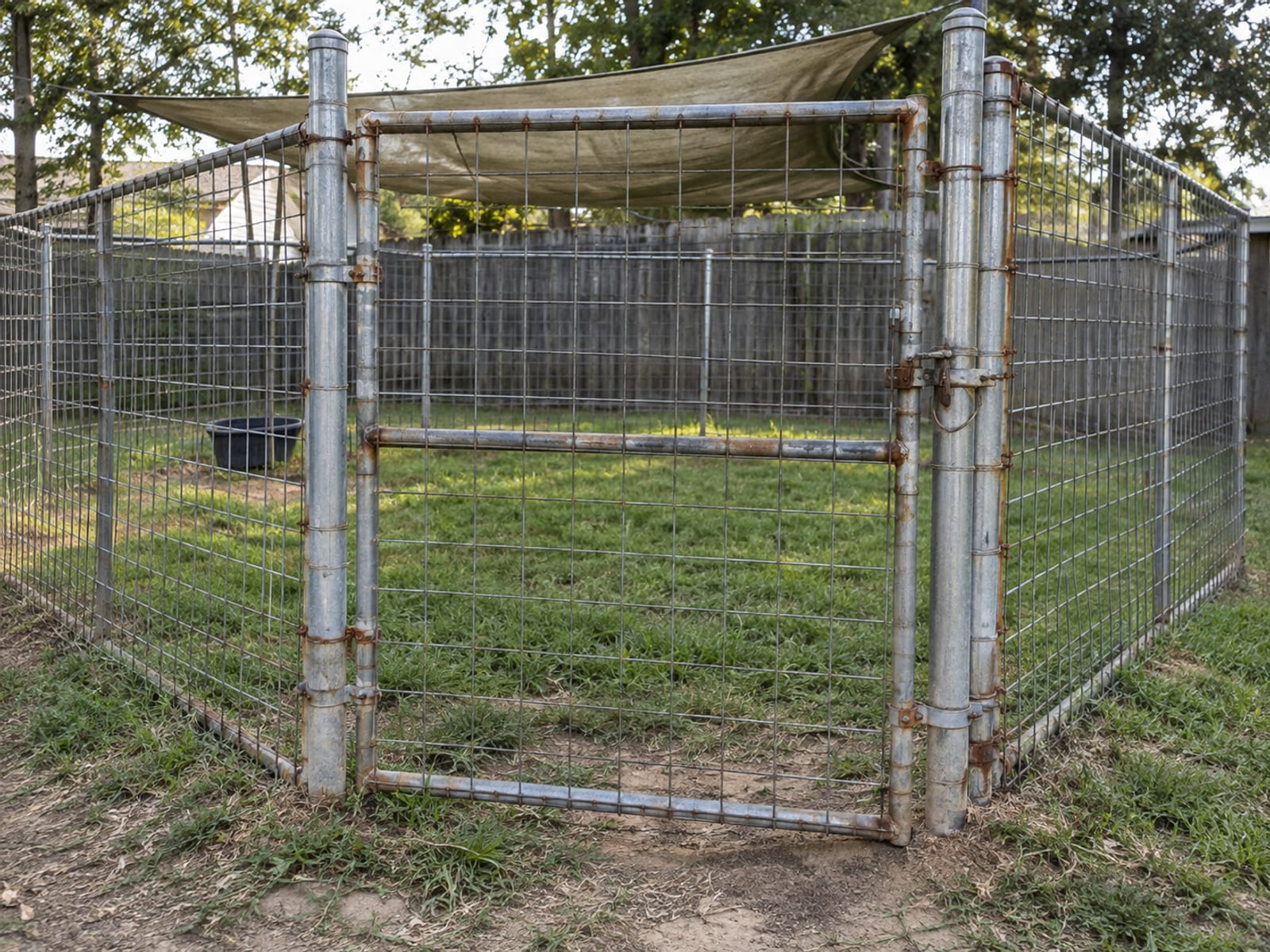
Section 822.041 (opens in a new tab) defines a dangerous dog as one that makes an unprovoked attack on a person that causes bodily injury, outside an enclosure reasonably certain to keep it from escaping. A dog can also be dangerous if it commits unprovoked acts outside such an enclosure that make a person reasonably believe it will attack and cause bodily injury.
The animal control authority is usually the city or county animal control office where the dog is kept, or the county sheriff where there is no such office. That authority may start a dangerous-dog proceeding. Chapter 822 provides for a hearing before the animal control authority and for court procedures in justice or municipal court, including hearings, appeals, warrants, seizure and destruction. Which court handles the matter depends on the procedure and the locality.
A dangerous-dog finding is a regulatory step, separate from whether the owner owes money to the person who was hurt.
How a Texas dangerous-dog matter moves
- The incidentA dog makes an unprovoked attack causing bodily injury, or unprovoked acts that make a person reasonably expect one, outside a secure enclosure.
- Proceeding beginsThe animal control authority may start a dangerous-dog proceeding.
- HearingChapter 822 provides for a hearing before the animal control authority.
- Court proceduresJustice or municipal court procedures cover hearings, appeals, warrants, seizure and destruction, depending on the locality.
- Owner's 30 daysWithin 30 days of learning the dog is dangerous, the owner registers it, restrains it and carries at least $100,000 in coverage or financial responsibility.
What the owner must do after a dangerous-dog determination
Under section 822.042 (opens in a new tab), the owner has until the 30th day after learning that he or she owns a dangerous dog to:
- Register the dog with the animal control authority.
- Restrain the dog at all times on a leash under immediate control or in a secure enclosure.
- Get liability insurance or show financial responsibility of at least $100,000 for bodily injury damages from an attack, and give proof to the authority.
- Follow the other registration and notification requirements of Chapter 822.
Hover or tap a row to highlight it.
| Item | Figure | Source |
|---|---|---|
| Deadline to sue for personal injury | Two years | Tex. Civ. Prac. & Rem. Code § 16.003(a) |
| Deadline for injury resulting in death | Two years from the date of death | Tex. Civ. Prac. & Rem. Code § 16.003(b) |
| Rabies observation for an identified biting dog | Ten days | 25 Tex. Admin. Code § 169.27 |
| Time to comply after a dangerous-dog finding | 30 days | Tex. Health & Safety Code § 822.042 |
| Liability coverage for a dangerous dog | At least $100,000 | Tex. Health & Safety Code § 822.042 |
| Claimant responsibility that bars recovery | Greater than 50 percent | Tex. Civ. Prac. & Rem. Code § 33.001 |
| Justice court and small claims limit | $20,000 | Tex. Gov't Code § 27.031 |
When an attack causes serious bodily injury or death
Section 822.005 (opens in a new tab), sometimes called Lillian's Law, creates the offense of attack by dog. An owner commits the offense in either of two situations. In the first, the owner, with criminal negligence, fails to secure the dog, and the dog makes an unprovoked attack outside the owner's real property, vehicle or boat that causes serious bodily injury or death. In the second, the owner knows the dog has been found dangerous under Chapter 822, and the dog makes an unprovoked attack outside a compliant secure enclosure that causes serious bodily injury or death.
The offense is generally a third-degree felony, and a second-degree felony if the attack causes death. After a conviction, a court may order the dog destroyed.
Chapter 822 (opens in a new tab) uses its own definition of serious bodily injury: severe bite wounds or severe ripping and tearing of muscle that would cause a reasonably prudent person to seek medical treatment and would require hospitalization, whether or not treatment was actually sought. When a bite ends in a death, the civil side is covered in our guide to wrongful death claims in Texas.
What if the person bitten provoked the dog or was trespassing?
Texas uses proportionate responsibility for tort claims. Under section 33.001 (opens in a new tab), a claimant cannot recover damages if his or her share of responsibility is greater than 50 percent. Responsibility can be assigned to the claimant, the defendant, a settling person or a responsible third party.

Provocation, trespass and the injured person's own conduct may affect how responsibility is divided, or may raise a separate defense, depending on the facts and the claim. Section 822.006 lists certain criminal conduct by the victim as a defense to prosecution under section 822.005, but that is a defense to a criminal charge, not an automatic defense to every civil claim. Our guide to modified comparative negligence in Texas explains how the percentage rule works in other injury cases.
What is the deadline to sue for a dog bite in Texas?
Section 16.003(a) (opens in a new tab) generally requires a personal injury lawsuit to be filed no later than two years after the day the claim accrues. For an injury that results in death, section 16.003(b) also allows two years, counted from the date of death.
Children are treated differently. Section 16.001 says a person younger than 18 is under a legal disability, and so is a person of unsound mind. If the claimant is under a legal disability when the claim accrues, that period is not counted toward the two years. A disability that begins later does not pause a period that has already started, and two disabilities cannot be stacked to stretch it. Other accrual, tolling and governmental-entity rules can also apply, so a Texas attorney can confirm the date for a specific bite. Our guide to the Texas statute of limitations for personal injury covers those rules more broadly.
Does homeowners or renters insurance cover a dog bite?
It might. The Texas Department of Insurance says on its dog bite coverage page (opens in a new tab) that homeowners insurance might help when a dog bites someone on the insured's property. Medical payments coverage may pay medical bills for people hurt on the property and may cover some injuries away from home, such as a bite at a park. Personal liability coverage (opens in a new tab) may apply to covered claims and lawsuits.
Coverage varies by company and policy, and TDI notes that some policies exclude certain breeds. A policy may also have limits, conditions, reporting duties or a requirement to disclose the dog. The policy and the insurer decide whether coverage applies, so the policy itself and the insurer are the places to confirm it.
Landlords, working dogs and postal workers
Each of these situations follows its own rules.
Landlords. Texas does not make a landlord automatically liable just because a tenant owns a dog. In Batra v. Clark (opens in a new tab), the court said a landlord who is out of possession may owe a duty to third parties when the landlord actually knows of the dog's dangerous tendencies and its presence on the property, and can control the premises. Control of common areas can matter too. In Do v. Nguy (opens in a new tab), a claim that a landlord failed to enforce a lease pet-weight limit did not survive summary judgment on that record.
Police, service and working dogs. Section 822.006 (opens in a new tab) gives defenses to the section 822.005 offense for specific people, including certain veterinarians, animal control staff, peace officers, law enforcement or corrections dog handlers, dog trainers, guard-dog company staff, qualified assistance-dog users and organized search-and-rescue participants. The list is specific, and it does not cover every working dog.
Postal workers. Postal employees are federal employees and may have rights under the Federal Employees' Compensation Act, which is a separate question from Texas dog-owner liability. A postal worker who was bitten on the job can ask the employing agency about benefits and talk with a lawyer who handles federal employee injury claims about any claim against the owner.
Where to get information or a referral in Texas
City or county animal control and the local health department answer quarantine and reporting questions, and the city or county code holds the leash, licensing and restraint rules. For court questions, the justice court clerk can explain filing steps.
Texas justice courts hear civil disputes up to $20,000, not counting interest, under Government Code section 27.031 (opens in a new tab), and the Texas small claims rules use the same $20,000 limit, as the Texas State Law Library explains (opens in a new tab). For legal information and help, TexasLawHelp (opens in a new tab) has a personal injury page, and the State Bar of Texas Lawyer Referral and Information Service (opens in a new tab) connects callers with participating lawyers. If cost is part of the question, our guide to how personal injury lawyers charge explains contingency fees and case expenses.
Check what you know about Texas dog bite law
Frequently asked questions about Texas dog bite law
A few more questions readers often ask.
Does a vaccinated dog still go through the ten-day observation?
Yes. Under 25 Texas Administrative Code section 169.27 (opens in a new tab), an identified dog that bites a person is quarantined for the ten-day observation period regardless of vaccination status. The local rabies control authority decides where the observation takes place.
Does a dangerous-dog label decide who pays for the injury?
No. A finding under Chapter 822 triggers registration, restraint and insurance duties for the owner, and it can matter in a criminal case. A claim for money damages still has to be proven under a civil theory such as negligence.
What does a State Bar referral consultation cost?
The State Bar of Texas Lawyer Referral and Information Service states that an initial consultation of up to 30 minutes with a participating lawyer costs no more than $20. That is the referral program's fee, not a measure of what later legal work costs.
What are the Spanish terms for a Texas dog bite claim?
A dog bite is a mordedura de perro, a dangerous dog is a perro peligroso, and the owner's liability is responsabilidad del dueño. TexasLawHelp has a Spanish personal injury page (opens in a new tab), Demandas por lesiones personales.
Finding a Texas personal injury law firm
If you want someone to review the bite, the records and the deadline that applies, a Texas personal injury attorney can do that with the full facts in front of them. You can search our directory of Texas law firms by city and practice area.
Terms in this guide
Tap a term to see what it means.
Negligence. Failing to use reasonable care, where the failure causes injury and damages.
Dangerous propensities. Tendencies abnormal to an animal's class; in Texas, an owner's knowledge of them can support liability, which people often call the "one-bite rule."
Negligence per se. Negligence shown by breaking a valid law or ordinance, such as a local leash rule, when the rule fits the people and injury involved.
Dangerous dog. Under Texas Health and Safety Code section 822.041, a dog that makes an unprovoked attack causing bodily injury outside a secure enclosure, or acts so a person reasonably expects such an attack.
Animal control authority. The city or county animal control office where the dog is kept, or the county sheriff where there is none.
Local rabies control authority. The local office that receives bite reports and oversees quarantine in Texas.
Serious bodily injury. Under Texas Chapter 822, severe bite wounds or severe ripping and tearing of muscle that would require hospitalization.
Proportionate responsibility. The Texas rule that divides responsibility by percentage and bars recovery for a claimant found more than 50 percent responsible.
Legal disability. Under Texas law, being younger than 18 or of unsound mind when a claim accrues, which keeps that time from counting toward the deadline.
This guide gives general legal information, not legal advice for your situation. Laws change and differ by state; a lawyer licensed in your state can tell you how they apply to you.