Services for law firms
Video Marketing for Law Firms
Counselado helps law firms turn legal questions and attorney introductions into clear, captioned English and Spanish videos for their website, Google Business Profile, YouTube, and social channels. Your firm supplies the legal judgment and the final approval. We handle planning, production, editing, captions, translation, and platform-ready delivery. A single trial video starts at $79, and monthly plans start at $99.
Which videos work for a law firm
Most firms do well with a small set of videos that each answer one question a prospective client would ask. The formats that fit most practices are:
- Short explainers that answer common legal questions.
- Attorney introductions that describe the lawyer's role, practice focus, languages, and service area.
- Process walkthroughs, such as what happens after an arrest, what to expect at an initial consultation, or how a personal-injury claim generally moves forward.
- Community and public-information videos, including local legal updates and safety information.
- FAQ videos and short vertical edits for social platforms.
- Firm or office videos that show the team, the location, accessibility, and the intake process.
- Client testimonials, but only when ethically permitted, accurate, authorized, and reviewed for confidentiality and advertising rules.
A firm does not need a large library to start. Reusable explainers on the questions your office hears most often can serve the website, the Google Business Profile, and social channels for a long time.

Where each video goes
The firm's own website is the main home for a video. YouTube suits explainers that people search for over time, and YouTube says its search relevance looks at how well the title, tags, description, and video content match a query. YouTube also says it does not accept payment for better placement in organic search results, so a title and description should describe the video accurately rather than promise a position.
A video on a verified Google Business Profile appears in Google Search and Google Maps after Google processes and approves it. Google's published limits are up to 30 seconds, up to 75 MB, and a resolution of 720p or higher. Social platforms can use shorter captioned versions: LinkedIn may fit business, employment, estate-planning, and commercial practices, while Facebook and Instagram may fit local consumer practices.
For video on your own site, Google Search Central recommends an indexed watch page where appropriate, a stable video URL and thumbnail, accessible video files, unique titles and descriptions, and VideoObject structured data where it applies. Google says structured data does not guarantee a particular search feature.
Video also has limits worth knowing. Google says that local results rest mainly on relevance, distance, and prominence, and that there is no way to request or pay for a better local ranking. Its AI features guidance says no special optimization guarantees inclusion in AI Overviews. For those reasons, we describe the work in terms of finished, accurate, accessible videos, and we do not promise rankings, clients, cases, or results.
For context on how firms are spending, Clio's 2025 Legal Trends Report found that about 15% of surveyed firms invested in online video in 2025, compared with about 24% in 2024, against about 85% investing in websites and 63% in online reviews. Those figures describe marketing spending, not what video does for cases or revenue.
Texas rules your lawyer reviews before a video goes live
Part VII of the Texas Disciplinary Rules of Professional Conduct governs how Texas lawyers describe their services. Rule 7.01(a) says a lawyer shall not make or sponsor a false or misleading communication about the qualifications or services of a lawyer or law firm, and that information about legal services must be truthful and nondeceptive. A statement can be misleading when it is substantially likely to lead a reasonable person to a conclusion with no reasonable factual foundation, or to create unjustified expectations about results.
Rule 7.02 includes restrictions that matter for video, including communications that use an actor or model to portray a client. The Texas Center for Legal Ethics explains that whether a disclaimer such as "dramatization" is enough depends on the facts, including whether it is clear and conspicuous. A video should identify dramatizations, actors, and reenactments so viewers can notice and understand them. A reenactment should never be presented as a real client experience.
Under Rule 7.04(a), a Texas lawyer must file an advertisement of legal services with the Advertising Review Committee of the State Bar of Texas no later than ten days after it is disseminated, unless Rule 7.05 exempts it. According to the State Bar's Advertising Review page, preapproval is encouraged but not required, a proposed script or description can be submitted at least 30 days before first dissemination, the application fee is $100, and a non-exempt advertisement that is not filed may lead to a $250 fine and a $100 review fee. Rule numbering and fees can change, so your lawyer should confirm the current text with the State Bar before publishing.
The lawyer decides whether a given video is an advertisement, a solicitation communication, or exempt. An exemption from filing does not make a misleading statement acceptable. Superlatives and any wording about specialization, need a factual basis and a rule that permits the exact statement.
The ABA Model Rules are a model, not binding law in every state, and state rules control. They are a useful comparison, though. Model Rule 7.2(d) requires a communication to include the name and contact information of at least one lawyer or firm responsible for its content, and Rule 7.2(b) separates paying the reasonable costs of advertising from paying someone for recommending a lawyer. A flat fee for producing, editing, captioning, or distributing video is a different arrangement from a fee per lead, per case, or per referral.
Testimonials, client stories, and confidentiality
A client's story is only usable with documented permission and a confidentiality review. That covers the client, the case, an image, a voice, a result, or a settlement. A public post does not remove a lawyer's duty of confidentiality; the ABA's discussion of Formal Opinion 496 concludes that a lawyer may not disclose information about a client's representation in response to a negative online review, even when the review is unfair.
The FTC adds federal rules for testimonials. Its Endorsement Guides questions and answers explain that a material connection between an endorser and an advertiser must be disclosed in a clear and conspicuous way, and in the language or languages used for the endorsement. In a video, that means a disclosure viewers can see or hear, not one buried in a description. The FTC's Consumer Reviews and Testimonials Rule, effective October 21, 2024, addresses fake or false testimonials, testimonials from people without actual experience, and buying or selling reviews. These rules sit beside, and do not replace, state advertising rules and confidentiality duties.
Captions, transcripts, and Spanish versions
WCAG 2.2 Success Criterion 1.2.2 requires captions for prerecorded audio in synchronized media at Level A. Captions should carry the dialogue, identify speakers when needed, and include meaningful non-speech sounds. A transcript gives viewers a searchable text version, and captions and transcripts also help people who watch without sound, have hearing loss, or simply prefer to read.
English and Spanish caption files make one video usable by audiences in both languages. A Spanish version should be translated accurately, reviewed by a fluent speaker, and synchronized with the video, and legal disclaimers and required disclosures should appear in the language of the video.
What the service includes and what your firm provides
We take on the production work:
- Topic planning and interview questions.
- Script drafting and editing in everyday language.
- Recording logistics, lighting, audio, framing, and teleprompter support.
- Filming several videos in one session.
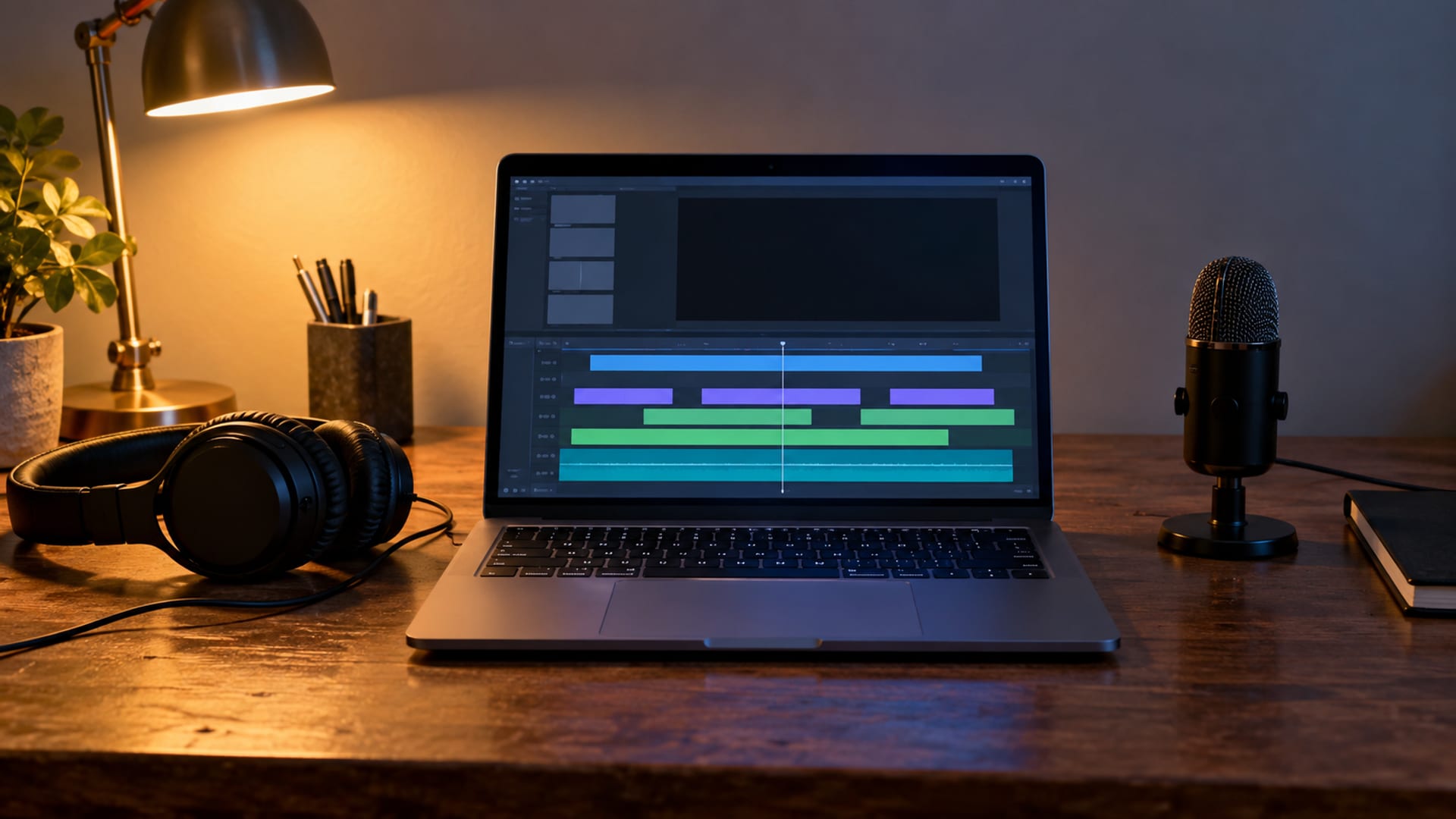
- Editing, graphics, lower-thirds, thumbnails, music licensing, and formatting.
- English captions, Spanish captions, transcripts, and translated versions.
- Short cuts for social media and longer versions for websites or YouTube.
- Upload preparation, titles, descriptions, chapters, and video metadata.
- A compliance checklist for your lawyer's review.
- Delivery of final files and, if agreed, publishing.
Your firm provides the judgment and the facts:
- Practice areas and priority locations.
- The audience and the common questions to answer.
- Accurate lawyer names, titles, licenses, offices, contact information, languages, and practice descriptions.
- The lawyer who will approve the content.
- A list of prohibited or sensitive subjects and any confidentiality restrictions.
- Written permissions for clients, employees, locations, photographs, music, trademarks, and testimonials.
- Required disclaimers and the advertising requirements for your jurisdiction.
- Access to the website, YouTube channel, Google Business Profile, and social accounts if publishing is included.
- A decision about English, Spanish, or bilingual versions.
- A review process and a deadline.
The lawyer decides whether each video is accurate, permissible, confidential, and not misleading, and whether it needs filing or preapproval. The lawyer also keeps control of passwords, accounts, ownership, and final approval.
If being on camera feels uncomfortable, prepared questions, shorter segments, voice-over, screen recordings, and text-supported videos are all options. A batch session can cover several short videos at once, and the lawyer still reviews the final representation of the firm.
What video costs and who owns it
Costs vary widely. A do-it-yourself video has no separate upload fee, but the firm supplies the lawyer's time, planning, recording space, a phone or camera, lighting, a microphone, editing, captioning, translation, thumbnails, and storage. At the other end, published pricing for multi-video libraries runs from $12,000 to $30,000. Location, travel, the number of attorneys and videos, scripting, filming days, animation, captions, translation, and revisions all move the price.
Counselado prices are flat fees, never per lead, per case, or per referral:
- One trial video, starting at $79.
- Plans starting at $99 a month for 2 videos.
- Plans starting at $199 a month for 4 videos.
A project can be scoped as a defined number of videos, with set deliverables, revisions, captions, translations, and publishing files, and ongoing production is a separate choice. Whichever provider you consider, the agreement should state who owns the final video, raw footage, scripts, captions, music licenses, project files, and accounts. Your firm should keep control of its website, YouTube channel, Google Business Profile, and social accounts, and videos should never sit only in an account the provider controls. Ask for a written quote that lists deliverables, revisions, travel, captions, translation, ownership, and publishing.
Questions about video marketing for law firms
Does video guarantee better Google rankings?
No. Google says local ranking depends mainly on relevance, distance, and prominence, and that paying cannot buy a better local ranking. A video can make a page more useful to visitors, but eligibility for a search feature is not a guaranteed position or an AI Overview appearance.
Can a law firm use a client testimonial in a video?
It can only when the testimonial is permitted under the firm's state advertising rules, comes from an actual client, is authorized in writing, and has been reviewed for confidentiality. In Texas, a person who appears as a client in a public advertisement must be an actual client of the firm. The lawyer approves the final cut.
Can law firm videos include past case results?
Statements about results need factual support and must not create unjustified expectations, which Texas Rule 7.01 treats as potentially misleading. Your lawyer decides whether a result can be mentioned and what context it needs.
Does the lawyer have to appear on camera?
Not for every video. Voice-over, screen recordings, and text-supported formats are options, though the lawyer still approves the final version and the claims in it.
Do you provide transcripts and Spanish captions?
Yes. We provide English captions, Spanish captions, and transcripts, and translated versions are reviewed by a fluent speaker before delivery.
Getting started
To ask about video, use the contact form and choose "Something else" as the topic, or visit the For law firms page. For directory options, see claiming your listing, adding your firm, and plans and pricing. The attorney advertising notice and the disclaimer explain more.