Lawsuits and mediation
What Is Breach of Contract: The Elements, the Remedies, and the Deadline to Sue
What breach of contract means, the four Texas elements, material vs. anticipatory breach, UCC goods rules, remedies, attorney's fees and deadlines to sue in TX, CA and NY.

Counselado · September 1, 2026 · United States · Updated October 1, 2026
A breach of contract generally means that one party failed to perform a promise that the law will enforce. The exact rule depends on which state's law governs the agreement and on what kind of contract it is. In Texas, a person bringing the claim generally must show a valid contract, their own performance or offer to perform, the other party's failure to perform, and damages that resulted, according to a 2018 Texas Supreme Court opinion (opens in a new tab). Sales of goods may fall under the state's version of UCC Article 2, which has its own rules and remedies. The contract itself may also contain notice, cure, arbitration, venue, choice-of-law, damages or attorney's fee terms that shape the dispute.
Key takeaways
- A breach is a failure to perform an enforceable promise; the governing state's law sets the elements and remedies.
- Texas uses four elements: a valid contract, the claimant's performance or tender, the other side's breach, and resulting damages.
- Money damages are the usual remedy; specific performance is rare and discretionary, and punitive damages are generally not available in Texas contract cases.
- Deadlines differ by state: four years in many Texas contract cases, four years (written) or two years (oral) in California, and six years in New York.
- A demand letter does not automatically extend a filing deadline.
- The contract's own notice, cure, arbitration and venue clauses can decide what happens first and where.
What breach of contract means
A contract is an agreement the law will enforce. A breach happens when one side does not do what the agreement required, whether that means not paying, not handing over goods, finishing late, doing defective work, or refusing to perform at all. Not every broken promise qualifies. The person making the claim has to show that an enforceable contract existed, that the required performance did not happen, and that the failure caused a loss the law recognizes or supports another available remedy.
Four things shape almost every contract dispute: the agreement's own words, the state law that governs it, the type of contract (services, goods, a lease, real estate, employment, construction), and the remedy being sought. The same facts can lead to different answers in different states, so a rule from one state never settles the question for another.
What must be shown in a Texas breach of contract claim
The Texas Supreme Court (opens in a new tab) identifies four elements:

- A valid contract existed.
- The person suing performed, or tendered performance, as the contract required.
- The other party breached by failing to perform or tender performance as required.
- The person suing suffered damages as a result.
The same opinion explains that Texas Pattern Jury Charges may ask a jury a broad question, such as whether the defendant failed to comply with the agreement, with additional instructions when terms or issues are disputed.
California describes the starting point a little differently. The California Courts self-help guide (opens in a new tab) says an enforceable contract requires mutual agreement, offer and acceptance, consideration, capacity and a legal purpose, and that a plaintiff must prove each element of the claim. New York sets a deadline for contract claims by statute, but the elements there come mainly from New York case law, so New York court opinions are the place to look rather than another state's list.
Written, oral, electronic and implied contracts
Many people assume a contract has to be on paper. TexasLawHelp.org (opens in a new tab) explains that most Texas contracts do not have to be written, but statutes of frauds require a writing for certain categories, such as some real estate transactions, leases longer than one year, and sales of goods over $500. California Courts likewise says contracts can be written, verbal, partly documented or implied from the circumstances, while some kinds must be written.
Terms often live in emails, text messages, invoices, online checkout pages or electronically signed documents. Whether each of those is enforceable depends on the applicable law and the agreement's terms, so keeping every record matters.
One more point catches many signers off guard. TexasLawHelp.org notes that a general three-day right to cancel does not apply in most situations; cancellation rights come from specific statutes for specific transaction types.
Material, minor and anticipatory breach
A material breach is generally a substantial failure that goes to the heart of what the parties exchanged. A minor breach is a smaller failure that may support damages without necessarily excusing the other side from finishing its own performance. An anticipatory breach generally means a clear refusal, before performance is due, to perform at all. Whether the other side must treat that refusal as final or may wait for performance depends on the governing state's law, and each state's case law sets the test for all three categories.
This distinction matters when each side accuses the other of breaching first. Whether one failure excused the other's performance is often the central question.
What changes when the contract is for goods
Sales of goods follow Article 2 of the Uniform Commercial Code as each state has adopted it. In Texas, that is Business and Commerce Code Chapter 2 (opens in a new tab). Section 2.201 covers the writing requirement for sales of goods. Section 2.601 gives the buyer rights when goods fail in any respect to conform to the contract, subject to the Code's other rules. Section 2.610 addresses anticipatory repudiation, and Section 2.612 covers installment contracts. For buyer remedies, Section 2.711 lists the general remedies, Section 2.713 covers damages for non-delivery or repudiation, and Section 2.715 covers incidental and consequential damages. Section 2.725 sets the deadline to sue.

These rules apply to goods. They do not automatically govern service contracts, employment agreements, leases or real estate contracts.
Hover or tap a row to highlight it.
| Section | What it covers |
|---|---|
| 2.201 | The writing requirement for sales of goods |
| 2.601 | The buyer's rights when goods fail in any respect to conform to the contract |
| 2.610 | Anticipatory repudiation |
| 2.612 | Installment contracts |
| 2.711 | The buyer's general remedies |
| 2.713 | Damages for non-delivery or repudiation |
| 2.715 | Incidental and consequential damages |
| 2.718 | Liquidated damages and clauses that limit remedies |
| 2.725 | The deadline to sue |
What to look for in the contract
Before anything else, read the entire contract, including attachments and anything it incorporates by reference. According to California Courts (opens in a new tab), a contract may require arbitration or mediation before a lawsuit, may make arbitration the only option, and may choose the venue or the governing law. Common clauses to find include:
- How notice must be delivered and whether it must identify the default.
- Whether the other side gets a cure period, and whether a party may terminate if the cure fails.
- Whether mediation or arbitration is required.
- Which state's law governs and where a lawsuit or arbitration must take place.
- Whether attorney's fees or costs can be recovered.
- Whether damages are capped, excluded or set in advance as liquidated damages.
Courts interpret these clauses under the applicable state law, federal arbitration law where it applies, and the contract's own text.
What remedies a court can award
In Texas, TexasLawHelp.org describes money damages as the usual remedy. Specific performance, a court order requiring a party to complete what it promised, may be available in rare situations when money cannot adequately make up for the loss, and the court has discretion over it. The same source says punitive damages are generally not available in a breach of contract action.
For sales of goods, Texas Chapter 2 sets out buyer remedies that include recovery tied to non-delivery or repudiation, cover and market damages, and incidental and consequential damages, each subject to the statute's requirements. Section 2.718 addresses liquidated damages and clauses that limit remedies in sales contracts.
California Courts states that California law limits the types and amounts of damages in contract cases. In Florida, Section 95.11 (opens in a new tab) sets a one-year limitations period for an action for specific performance of a contract, which is separate from the deadline for a damages claim. Rescission and restitution exist as well, but they depend on the state and are never automatic.
What mitigation means
Mitigation is about avoidable loss. As a general rule, damages may be reduced when the injured party could reasonably have avoided additional loss after the breach. The exact rule, who has to prove it, and its exceptions vary by state and contract type. For sales of goods in Texas, Section 2.715 limits consequential damages to losses that could not reasonably be prevented by cover or otherwise.
How long you have to sue
Deadlines depend on the state, the type of contract, the claim and the remedy. These examples come from four states; they are not national rules.
Hover or tap a row to highlight it.
| State | Claim | General period | Source |
|---|---|---|---|
| Texas | Actions with no other express period | Four years after accrual | Civil Practice and Remedies Code 16.051 (opens in a new tab) |
| Texas | Listed claims, including debt and certain real property contract claims | Four years after accrual | Civil Practice and Remedies Code 16.004 (opens in a new tab) |
| Texas | Sale of goods | Four years after accrual; the contract may shorten it to no less than one year but may not extend it | Business and Commerce Code 2.725 (opens in a new tab) |
| California | Written contract | Generally four years from the breach | California Courts (opens in a new tab) |
| California | Oral contract | Generally two years from the breach | California Courts (opens in a new tab) |
| New York | Contractual obligation or liability, express or implied | Generally six years | CPLR 213 (opens in a new tab) |
| Florida | Specific performance of a contract | One year | Florida Statutes 95.11 (opens in a new tab) |
California Courts notes that calculating the deadline can depend on the facts. Accrual rules, tolling, rules that delay when the clock starts, contract clauses that shorten the period, partial payment, acknowledgment, bankruptcy and claim-specific statutes can all affect timing. A demand letter does not automatically extend a limitations period, so confirm the deadline for your state and claim type with an attorney licensed in that state.

Attorney's fees
In most disputes each side pays its own lawyer unless a statute, the contract or a recognized exception says otherwise. Texas is one place where a statute can shift fees. Civil Practice and Remedies Code Section 38.001 (opens in a new tab) lets a claimant recover reasonable attorney's fees in several categories, including an action on a contract. Section 38.002 adds three requirements: the claimant must be represented by an attorney, must present the claim to the other party or its agent, and the other party must fail to pay the just amount owed before the 30th day after presentment. The chapter also contains presumptions and exceptions, and the contract's own fee clause may matter too. California Courts notes that a contract may provide that the losing side pays attorney's fees.
Where a contract claim is filed
Where a case belongs depends on the amount, the remedy, the subject and the county. In Texas, Office of Court Administration material (opens in a new tab) from October 2025 states that justice courts hear civil actions of not more than $20,000; that is a Texas figure only. County-level courts handle civil matters within their statutory ranges, and district courts are courts of general jurisdiction.
Venue can be set by statute, by the contract or by court rules. California Courts lists possible locations such as where the defendant lives or does business, where the contract was made, where performance was due, or where the breach happened. If an enforceable arbitration clause applies, the dispute may go to an arbitrator instead of a court.
Steps people take before filing
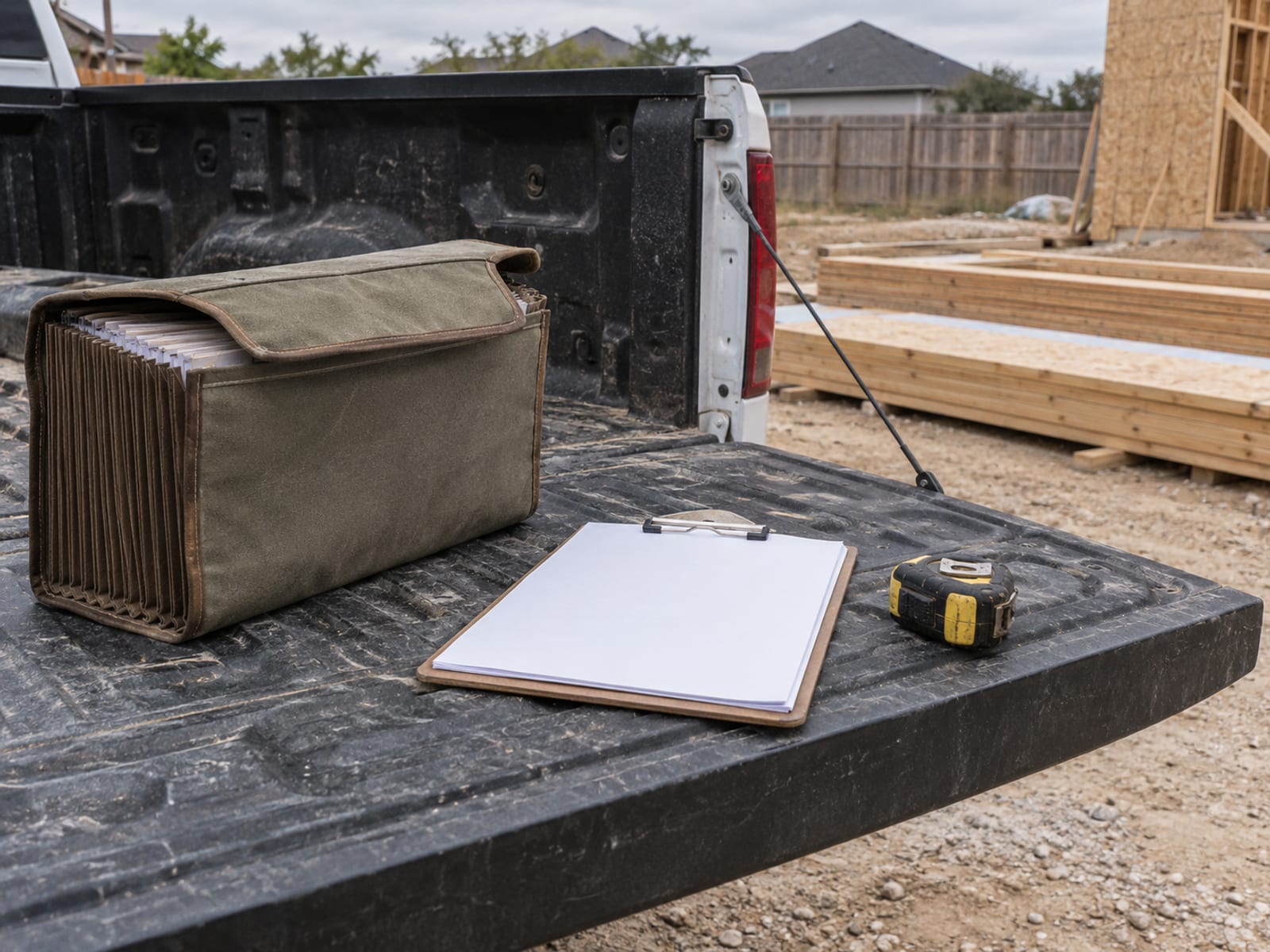
Official court and legal-help materials describe a common set of preparation steps. Read the whole contract and note its governing-law, venue, notice, cure, mediation, arbitration, damages and fee terms. Keep the contract, amendments, invoices, receipts, payment records, emails, messages, photos, delivery records and notices. Write out a timeline of what each side promised, what was done, what was not, and when. Check whether the contract requires written notice before anything else.
Many disputes start with a written demand that identifies the agreement, the alleged failure, and the payment or cure requested. Our guide to what a demand letter is covers what one usually says. Mediation is another option. Texas Court Help (opens in a new tab) describes it as a process in which a trained mediator helps the parties communicate and try to resolve the dispute without deciding it like a judge would; our guide on what mediation in a lawsuit is explains how it works. If you are the one who received the lawsuit, see what to do if you are served with a lawsuit.
Common steps before filing a contract claim
- Read the contractRead the whole agreement and note its governing-law, venue, notice, cure, mediation, arbitration, damages and fee terms.
- Keep the recordsKeep the contract, amendments, invoices, receipts, payment records, messages, photos, delivery records and notices.
- Build a timelineWrite out what each side promised, what was done, what was not, and when.
- Check notice rulesConfirm whether the contract requires written notice before anything else.
- Send a demandMany disputes start with a written demand that identifies the agreement, the failure and the payment or cure requested.
- Consider mediationA trained mediator can help the parties try to resolve the dispute without deciding it.
- Confirm the deadline and courtCheck the limitations period and the proper court or arbitration forum.
Who handles each part
Court clerks accept filings and explain procedures, but Texas Court Help (opens in a new tab) notes that court staff cannot apply the law to your facts or recommend a strategy. A judge decides the issues assigned to the court. A mediator helps the parties negotiate, while an arbitrator decides the dispute when an enforceable arbitration agreement gives that authority. An attorney applies the law to the facts, evaluates claims and defenses, and represents a party when hired. In Texas, the Texas State Law Library (opens in a new tab) offers public legal research resources, Texas Court Help (opens in a new tab) offers court information, forms and self-help centers, and the State Bar of Texas Find a Lawyer directory (opens in a new tab) shows public attorney profiles, including public disciplinary history. Our guide on how to find a lawyer walks through checking a license.
Check what you know
Frequently asked questions about breach of contract
These answers cover the follow-up questions people ask most often after learning the basics.
Can an oral contract be enforced?
Sometimes. In Texas, most contracts do not need to be written, but a writing is required for categories such as certain real estate deals, leases over one year and sales of goods over $500. Whether a particular oral agreement holds up depends on the state and the transaction.
Does a demand letter stop the clock on my deadline?
Not automatically. Limitations periods depend on the state, the claim, tolling rules and the contract's own terms. Confirm the deadline for your claim rather than relying on a letter to extend it.
Can a contract keep a dispute out of court?
Yes. A contract may require mediation or arbitration before a lawsuit, or make arbitration the only way to resolve the dispute. It may also choose the state's law that applies and where any case must be filed.
Are punitive damages available for breach of contract in Texas?
Generally not. TexasLawHelp.org states that punitive damages are not generally available in Texas breach of contract actions, though other legal claims may follow different rules.
Finding a lawyer for a contract dispute
Applying these rules to a specific agreement, weighing defenses, or preparing court papers is work for an attorney licensed in the state whose law governs the contract. You can compare firms that handle contract, business and litigation matters in our law firm directory.
Terms in this guide
Tap a term to see what it means.
Tender. An offer to perform what the contract requires; in Texas, performing or tendering performance is one element of the claim.
Material breach. A substantial failure that goes to the heart of what the parties exchanged; each state's case law sets the test.
Minor breach. A smaller failure that may support damages without necessarily excusing the other side from its own performance.
Anticipatory breach. A clear refusal, before performance is due, to perform at all.
Statute of frauds. A law that requires certain contracts to be in writing, such as some real estate deals and, in Texas, sales of goods over $500.
Cure period. Time a contract gives the other side to fix a default after notice.
Specific performance. A court order requiring a party to complete what it promised; it is rare and discretionary.
Liquidated damages. An amount the contract sets in advance as damages for a breach.
Mitigation. Reasonable steps to avoid additional loss after a breach; damages may be reduced when avoidable loss was not avoided.
This guide gives general legal information, not legal advice for your situation. Laws change and differ by state; a lawyer licensed in your state can tell you how they apply to you.